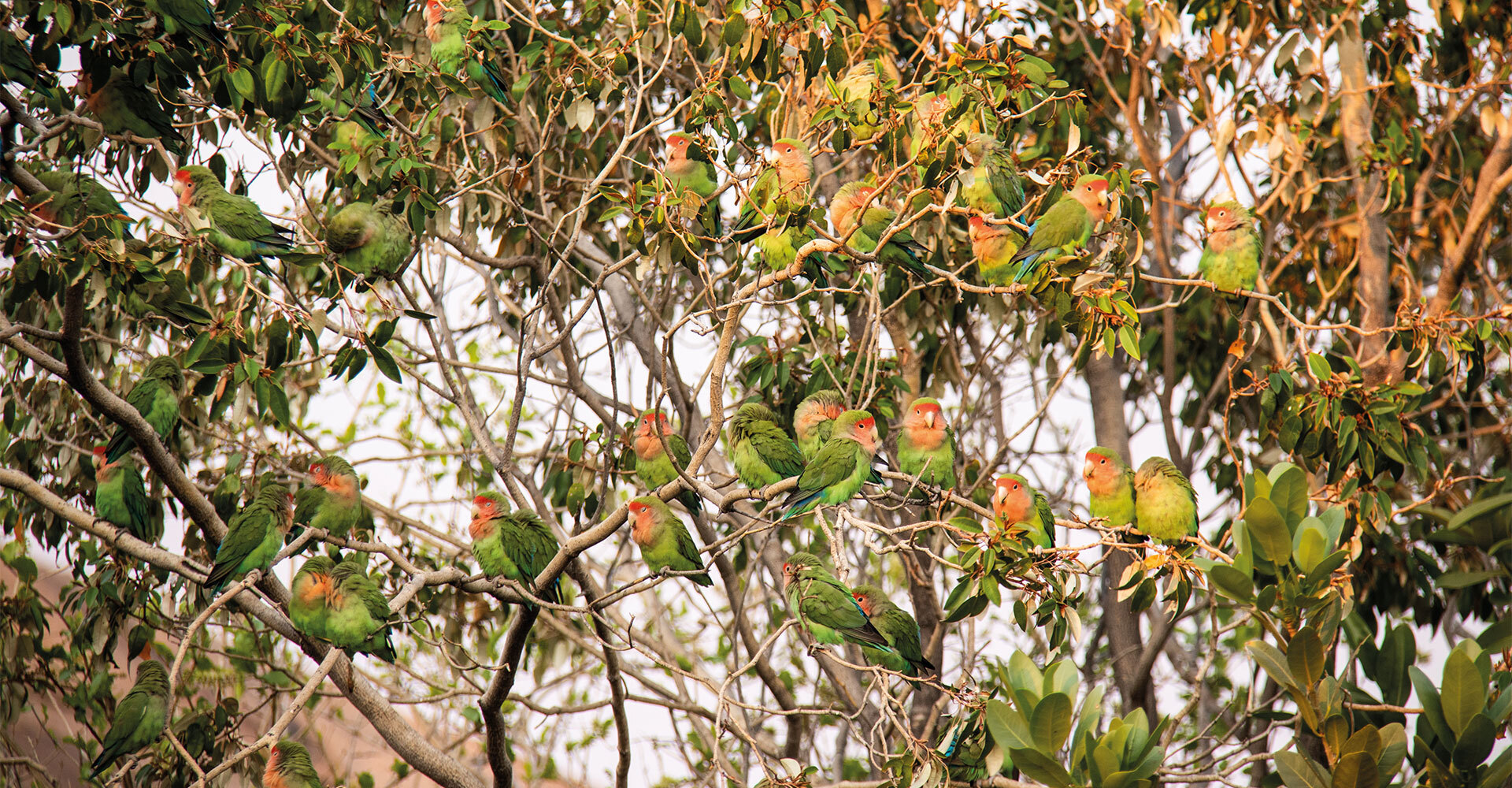
The Erongo Mountains are one of the best birding destinations in Namibia — and one of the least crowded. Over 213 species have been recorded here, including a single Namibian endemic found nowhere else on earth and eleven near-endemics that serious listers travel specifically to see.
Ondudu sits at the heart of this, in a secluded valley where granite hills, dry riverbed, and thornbush scrub create the kind of habitat diversity that keeps birders busy for days. The waterhole just below the viewing deck draws birds throughout the day. Sit with a coffee in the morning and you might not move for an hour.
The mountains sing through their birds.
Why the Erongo is special for birders
The mountains act as a meeting point for three different ecosystems — the Namib Desert to the west, open savanna to the east, and the granite highland in between. Species from all three show up here, which is why the list is so long and the mix so varied. This is also relatively intact habitat within a large, privately managed conservancy. No mass tourism, no vehicle pressure, no noise. The birds behave naturally, which makes for much better sightings than you'll get in busier parks.
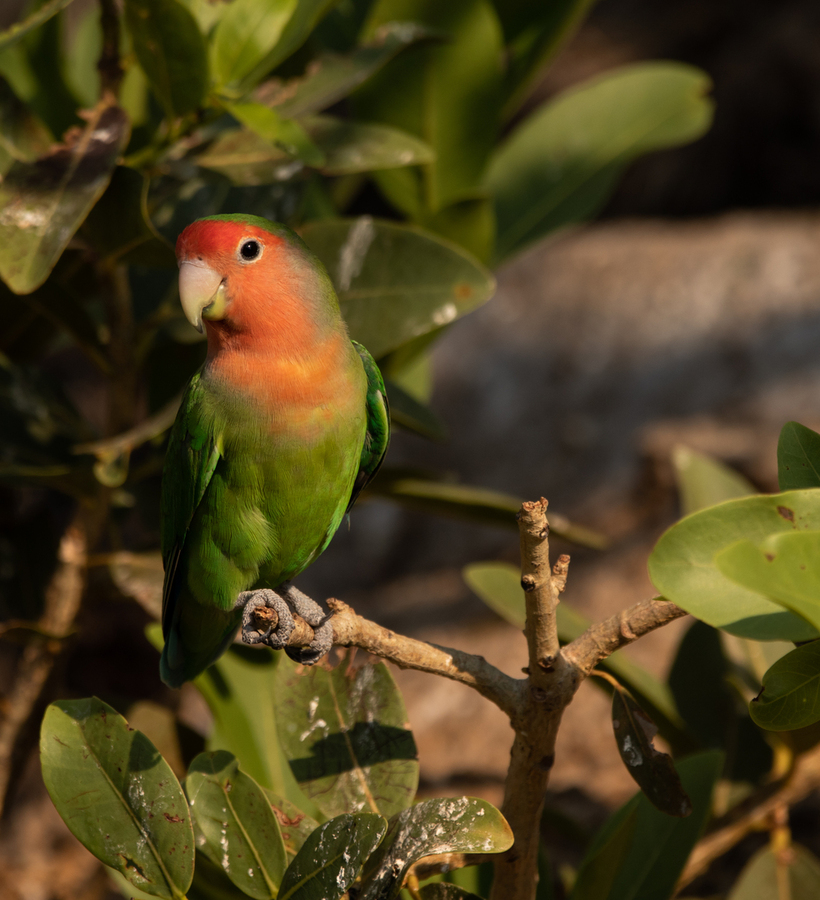
The one bird that makes listers drive a long way
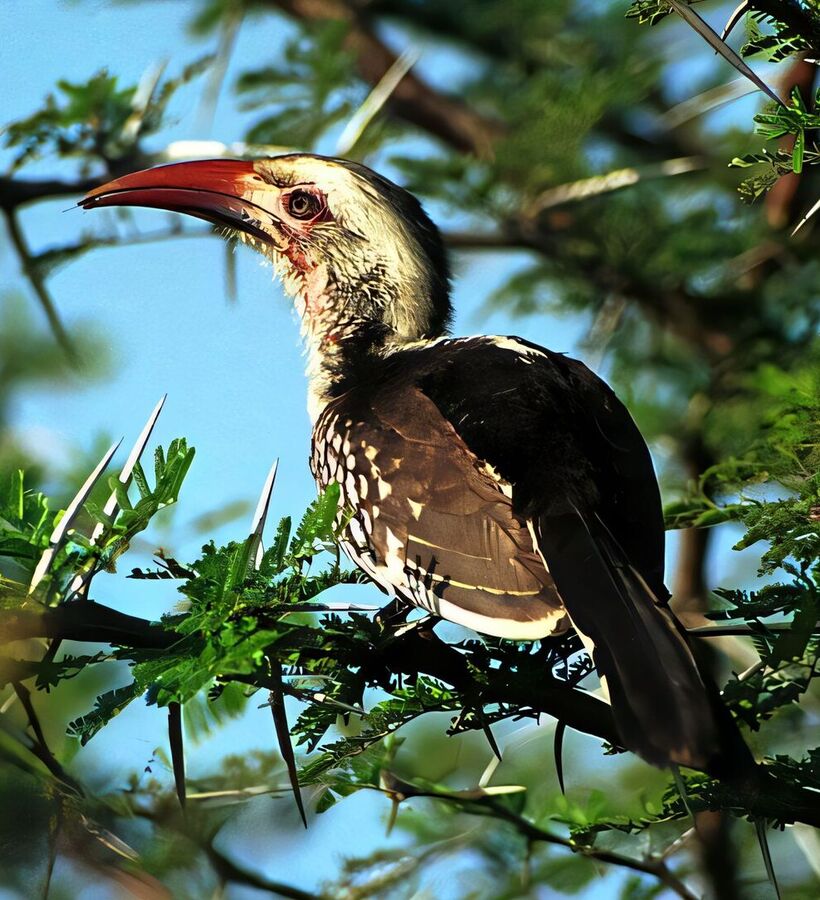
Damara Red-billed Hornbill (Tockus damarensis)
Namibia's only true endemic to this region, and the Erongo is one of its most reliable haunts. You'll hear it before you see it: a rapid, laughing call from somewhere in the thornbush. Smaller and chunkier than other red-billed hornbills, with a distinctive pale face. Most mornings, there's one working the acacia scrub near the lodge.
Near-endemics on the list
These species have tiny world ranges — the Erongo is one of very few places you'll see them.
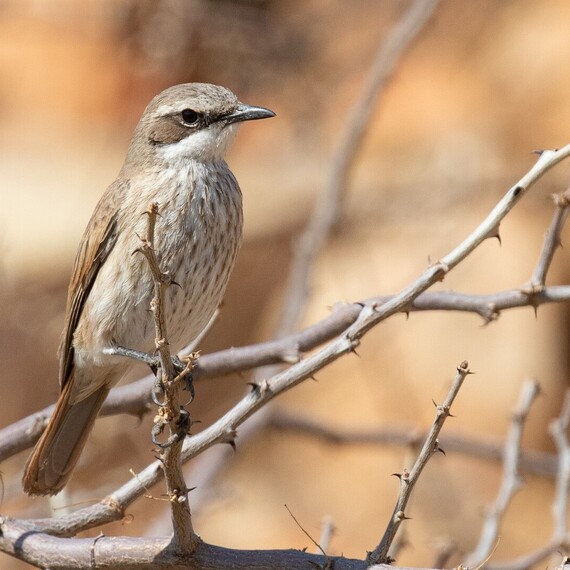
Herero Chat
A tidy, robin-d bird of rocky slopes. One of the most sought-after in the whole country.
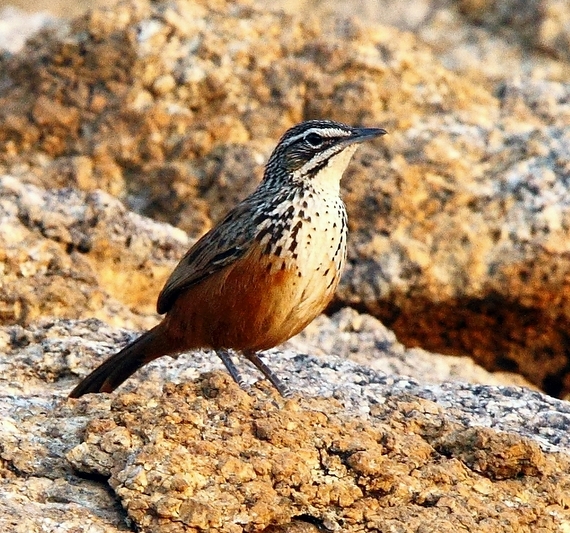
Rockrunner
Lives in boulder fields and moves through them fast. More often heard than seen, but patient sitting near the rocks usually pays off.
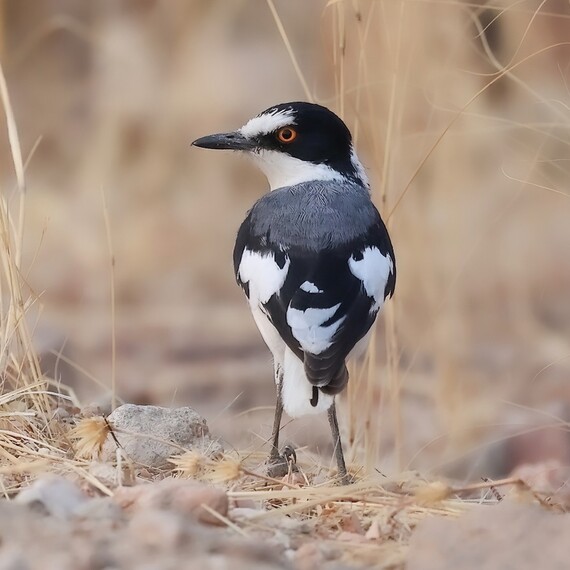
White-tailed Shrike
Unmistakable in a tree — bold white tail, short and plump, usually in small groups.
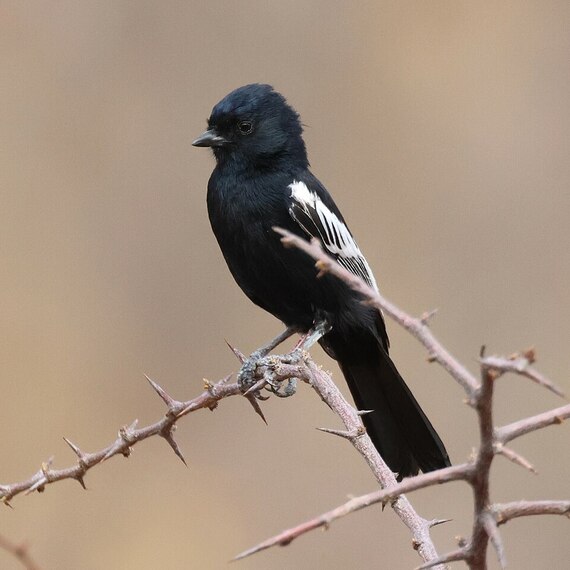
Carp's Tit
The Erongo equivalent of a blue tit, but rarer. Fond of dry acacia woodland.
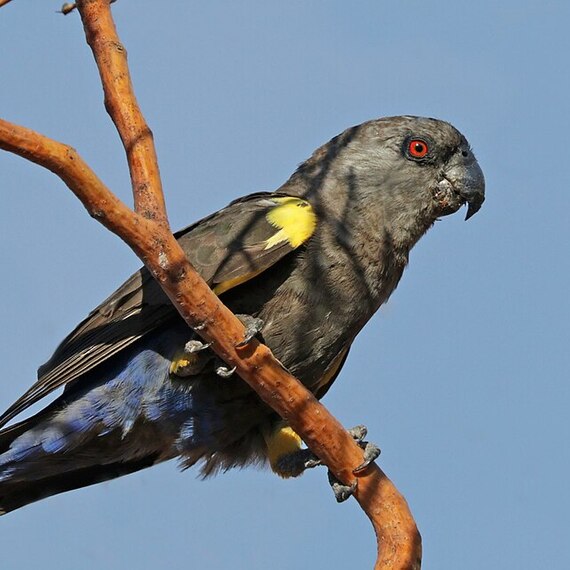
Rüppell's Parrot
A dark, fast-moving parrot that favours large trees near waterholes. The waterhole at Ondudu is a good spot.
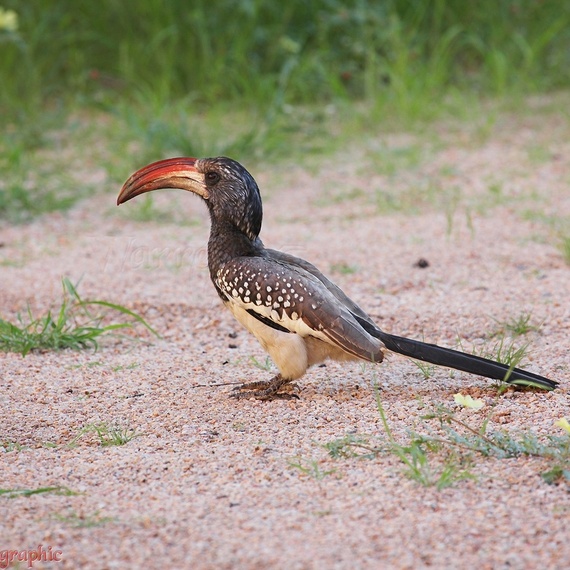
Monteiro's Hornbill
Large, loud, and impossible to miss. Often comes in to the waterhole.
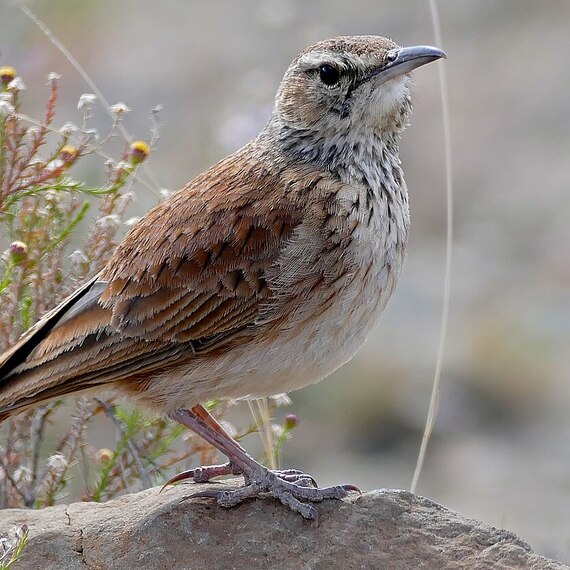
Karoo Long-billed Lark
Rocky, open terrain. Listen for its far-carrying song.
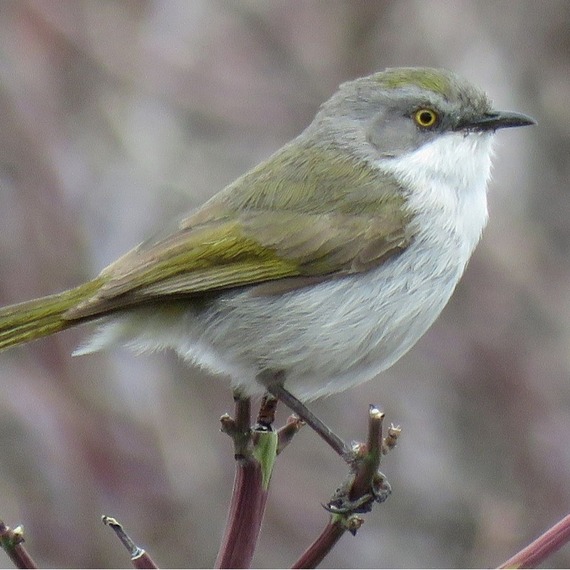
Karoo Eremomela
Small, active warblers in the scrub. More rewarding once you know what to listen for.
Raptors
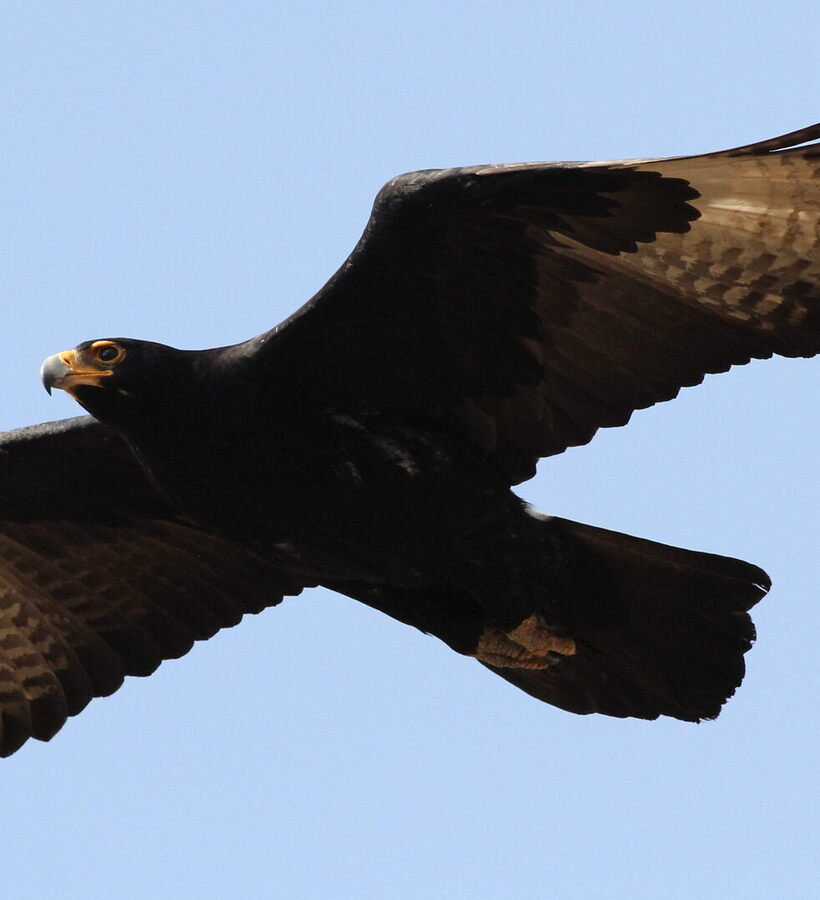
The Erongo has excellent raptors. Verreaux's Eagle breeds in the mountains — a pair usually works the ridge above the lodge — and it's one of those birds that stops conversations. Pure black with a white back, massive wingspan, completely at home in this landscape. Black-chested Snake-Eagle, Booted Eagle, and Tawny Eagle are all regularly recorded. Keep an eye on the thermals building off the granite faces in late morning
Birding around the property
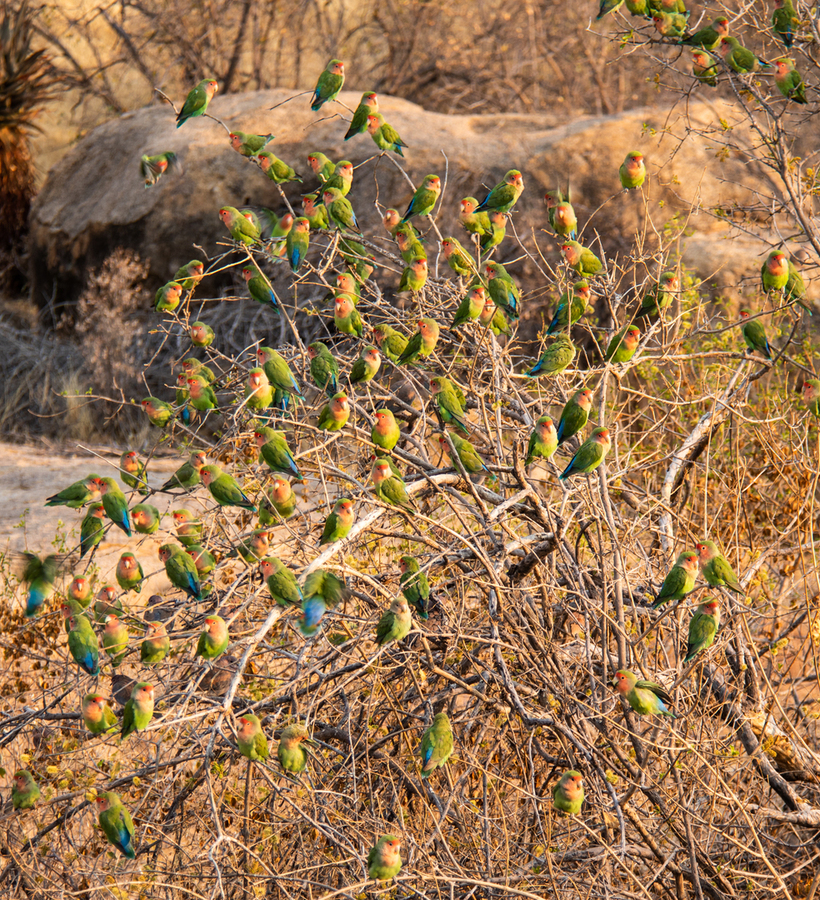
The waterhole is the most productive single spot. From the viewing deck above the lodge, early morning and late afternoon bring a steady flow of birds coming in to drink. Sit still and the traffic is remarkable.
The dry riverbed below the property is worth walking slowly. The dense riverine scrub here holds different species to the open rocky ground above — look for Bradfield's Swift, Gray-backed Camaroptera, Black-faced Waxbill, and Chestnut Weaver near any remaining water.
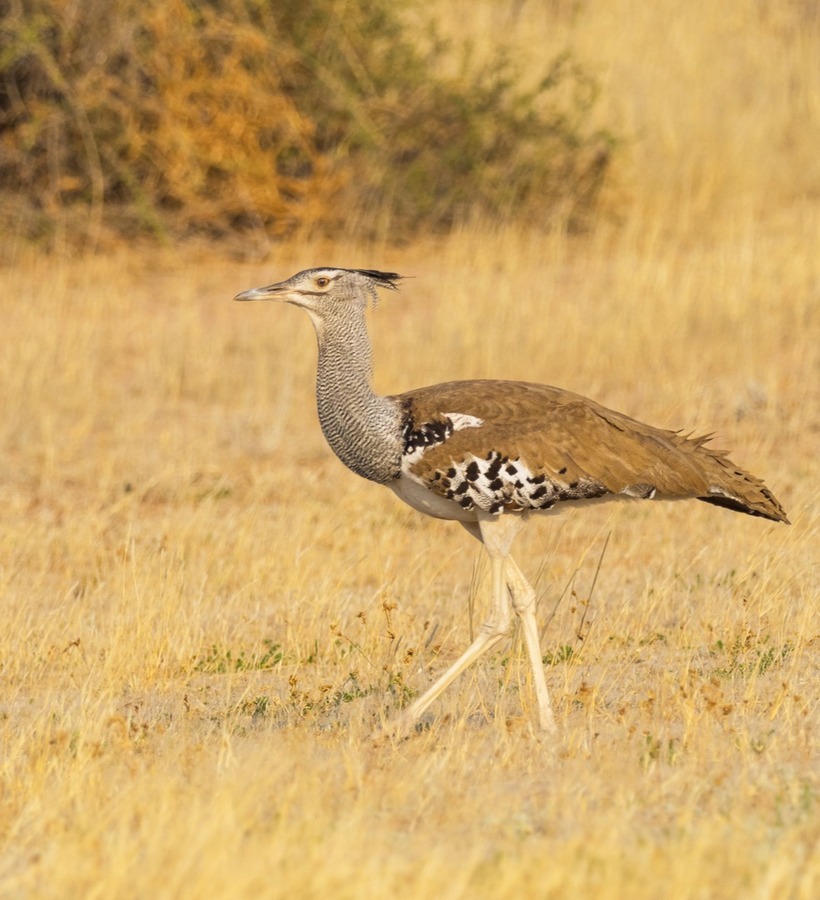
The granite slopes above the lodge are where to look for Rockrunner, Herero Chat, and the Verreaux's Eagle pair. The sunrise walk takes you up through this terrain — go slowly and listen. The thornbush flats on the lower farm roads are good for bustards, larks, and francolins in the early morning.
When to visit for birding
April to October (dry season) is the best time for birding at Ondudu. Vegetation is thinner, visibility is better, and birds concentrate around permanent water — including the lodge waterhole. The near-endemics are resident year-round, so there's no "bad" time, but the dry months make them much easier to find.
November to March (green season) brings summer migrants and different species active in the breeding season, including a good range of intra-African migrants moving through. The landscape is greener and photogenic, but denser vegetation can make birding harder.
JOURNEYS NAMIBIA PORTFOLIO